

Finding the right rat deterrent
If you’ve ever typed “rat deterrent” into Google you’ll have found a lot of products promising to solve it for you.
This article gives a comprehensive run through every common rat deterrent on the market, including the ones you see advertised on Amazon, the home remedies that get passed around online and the methods that pest controllers actually use. We’re a pest control company so we have a view, but we’ve tried to be totally transparent about each option, including the ones we don’t sell.
Do rat deterrents actually work?
Some do and some don’t but none of them remove rats that are already inside.
That last point is the most important thing to understand before you spend money. The word “deterrent” gets used loosely online. Strictly speaking, deterrence is about stopping rats coming in. Once you’ve got rats nesting in your loft or under your floorboard’s deterrents won’t be effective.
Methods and products compared
Ultrasonic rat repellents
Plug-in or battery devices that emit high-frequency sound supposedly unpleasant to rats.
Pros: Cheap. Easy to fit. Worth knowing that unlike birds, rats can actually hear ultrasonic frequencies, so the basic premise isn’t biologically impossible.
Cons: The evidence in real-world conditions is poor. Lab studies show rats respond initially but get used to it within days. Field trials in real homes have generally shown no significant reduction in rat activity. Sound also doesn’t pass through walls, so a device in your kitchen does nothing for rats in your loft.
Best for: Honestly, our view is don’t bother. They’re popular online because they’re cheap and easy to ship.
Peppermint oil and other smells rats supposedly hate
Bottles of peppermint, eucalyptus or citronella oil, often sold as “natural rat deterrent”. Mothballs and naphthalene also fall into this category.
Pros: Cheap. Smells nice (the oils, not the mothballs). Some anecdotal effect on individual rats in confined spaces, like keeping a rat out of a specific cupboard.
Cons: Won’t shift an established infestation. Rats just go round bad smells when their food source or nesting site is on the other side. The effect, where there is one, fades within days as the smell dissipates and the rat gets used to the smell. Mothballs are also toxic to children and pets, which makes them a bad choice for a domestic setting.
Rats mildly dislike strong smells like peppermint, ammonia and predator urine but none of these will solve a rat problem. They’ll occasionally redirect a rat that hadn’t already committed to a route.
Best for: Topping up other measures in a small, confined space. Not a standalone solution.

Predator urine (fox, cat, ferret)
Sold in bottles and pellets. The idea is that the smell of a predator triggers an avoidance response.
Pros: Has some evidence of effect on rural rats that haven’t met humans much.
Cons: Urban and suburban rats are largely used to predators. They live alongside foxes and cats already and have learned to ignore the smell. Also, it smells exactly as you’d expect!
Best for: Possibly rural barns or outbuildings. Not domestic homes.
Cats and dogs
Cats are sometimes recommended as a natural rat deterrent. Most aren’t. A few breeds (Maine Coons, some farm cats) are genuine ratters. Most domestic cats will watch a rat run past with mild interest. Dogs are similar, with terriers being the exception.
Pros: Where you’ve got a real ratter (a Jack Russell or a barn cat), they do reduce rat activity meaningfully.
Cons: Getting a pet specifically as a rat deterrent is rarely a good idea. Pets need to be wanted for their own sake. They also bring food into the house (pet food bowls left out attract rats), which can create the problem you were trying to solve.
Also have you ever chased a rat round your kitchen at 5am that your cat has brought in but failed to kill?
Snap traps, electric traps and live traps
Traps are technically removal rather than deterrence, but they come up so often it’s worth covering.
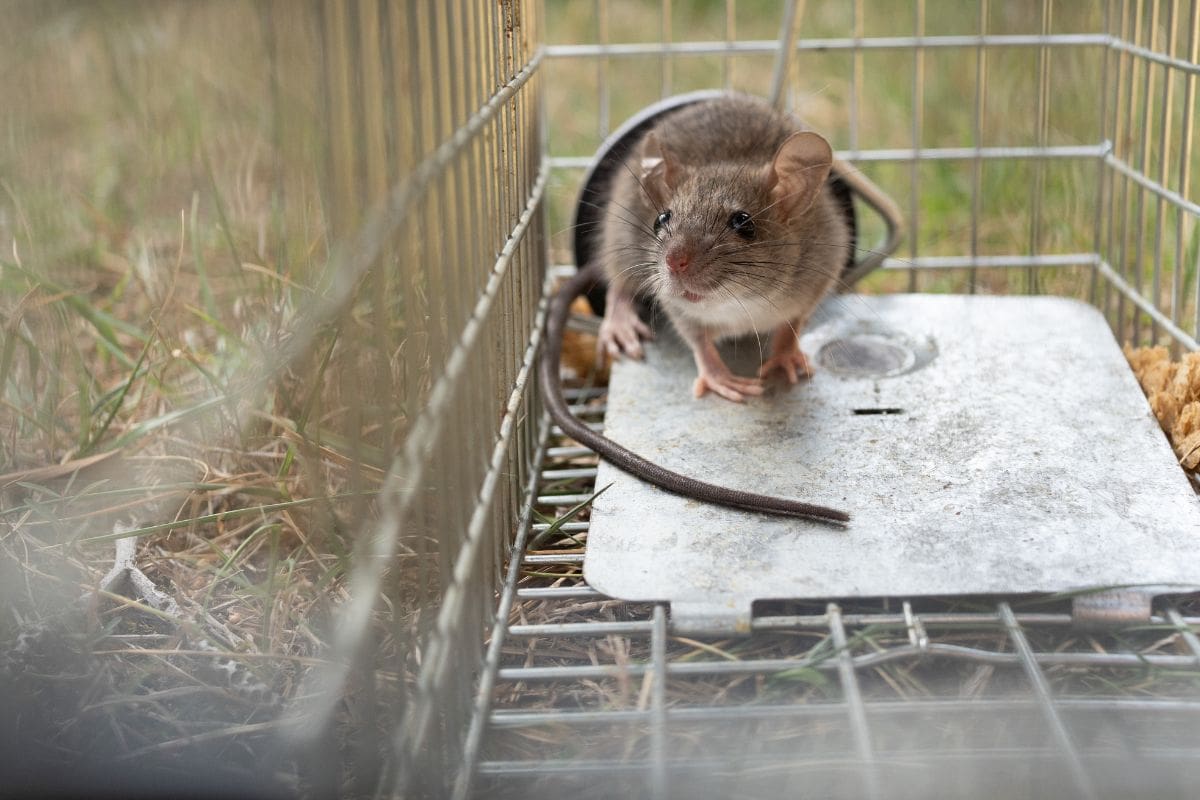
Snap traps are cheap, effective for individual rats, and humane when they work properly. They struggle with infestations because rats are neophobic (wary of new objects) and won’t approach a fresh trap for several days. Do not put these out in the open as you could accidently snare a non-target animal (hedgehog, vole, field mouse).
Electric traps are more reliable than snap traps, more humane in execution, and significantly more expensive. Same neophobia issue applies.
Live traps are popular with people who want to catch and release. The problem is that you can’t legally release rats into the wild in the UK because they’re classed as a pest species under the Wildlife and Countryside Act 1981. Live trapping ends the same way as snap trapping, just with more steps and more stress for the rat.
Glue traps are out. The Glue Trap Offences Act 2022 made their use by the public illegal in England without a licence, and they’re banned in Scotland and Wales for similar reasons. They’re inhumane, indiscriminate and you shouldn’t use them.
Best for: Catching one or two rats you’ve spotted in a specific location. Not a solution for an established infestation.
Poison baits (rodenticides)
The chemical method, normally based on second-generation anticoagulants.
Pros: Effective when used correctly. Standard tool for professional pest control.
Cons: UK regulations on rodenticides have tightened considerably. The Campaign for Responsible Rodenticide Use (CRRU) sets standards for professional users, and most second-generation anticoagulants now require certification to buy and use. There are real risk to non-target wildlife (owls, foxes, hedgehogs) from secondary poisoning as well as to pets and children.
Best for: Professional treatment in suitable settings. Not a DIY first-line solution in most domestic situations.
Sealing entry points and removing food sources
The unglamorous method that actually works.
Pros: Permanent. Usually cheap to do. Addresses the root cause rather than the symptoms.
Cons: Requires effort and knowledge of where rats actually get in (it’s almost never where you think).
Best for: Every home. This is the foundation that everything else builds on.
So, what’s the best deterrent against rats?
Exclusion. Seal the gaps they’d come in through, remove the food and shelter that drew them in, and you’ve genuinely deterred rats.
Every product-based deterrent is at best supplementary to that, and at worst a waste of money. The reason ultrasonic devices, peppermint oil and predator urine keep getting sold is that they’re easy to ship and the buyer can’t easily tell whether they worked. The rats might have left because of the device, or because someone next door fixed their drains, or because the food source they were after ran out.
If you want something to really repel rats long-term, fix the gaps, the bin lids, and the leaky pipes.
How do I permanently get rid of rats?
If they’re already inside, deterrents won’t shift them. You need removal first, which usually means a pest controller because the methods that work (proper baiting, monitoring with cameras, identifying entry points through drains and cavities) need training and kit you don’t have.
Once they’re gone, the permanent solution is rat-proofing. Find every gap larger than the diameter of a pencil and seal it. Cover air bricks with proper rodent-proof covers, not sealant. Fit door brushes. Rodent drain surveys and non-return valves often fix drain issues. Remove food sources, including unsecured bin bags, pet food left out overnight, and compost heaps with cooked food in them. Stop feeding the birds and cut back vegetation touching the house.
Done thoroughly, this will be permanent. Rats will find new houses to inhabit.
What time of year is worst for rats?
Autumn and winter, by some distance.
Rats are around all year, but the time when most homes notice them is from October through February. Two things drive this. First, temperatures drop, and the warm dry insulation in your loft becomes much more appealing than wherever they were nesting in summer. Second, outdoor food sources thin out. Garden fruit is gone and the easy pickings rats relied on through summer dry up so they move indoors.
Spring is also worth flagging. Rats breed prolifically (a single pair can produce hundreds of descendants in a year) so a small autumn problem that wasn’t dealt with becomes a much bigger spring problem.
Do rats come out at night or during the day?
Mostly at night. Rats are nocturnal by preference and most active in the few hours after dark and before dawn.
Daytime sightings can be worth paying attention to, particularly in urban and suburban settings where rats generally avoid people. A rat out in the open during the day in a built-up area usually means one of two things. Either there’s a heavy infestation and the dominant rats are pushing the smaller ones out to forage at unusual times, or the rat is sick.
In rural settings the picture is different. A single rat turning up at dusk under a bird feeder, or scavenging from a compost heap in the early evening, is often just a healthy rural rat that’s worked out where the easy food is. Rural rats are bolder and more flexible about timing because they encounter humans less.
The thing to watch for either way is multiple sightings, increasing frequency, or signs of damage and droppings indoors. One rat at the bird feeder in the evening isn’t a problem. Five rats in broad daylight on the lawn is.
If you’re hearing scratching in the loft only at night, that’s normal rat behaviour. If you’re seeing them on the lawn at lunchtime, you’ve likely got more of them than you want!
Will a rat come near a sleeping human?
This is the question that worries people most, and the answer is usually reassuring.
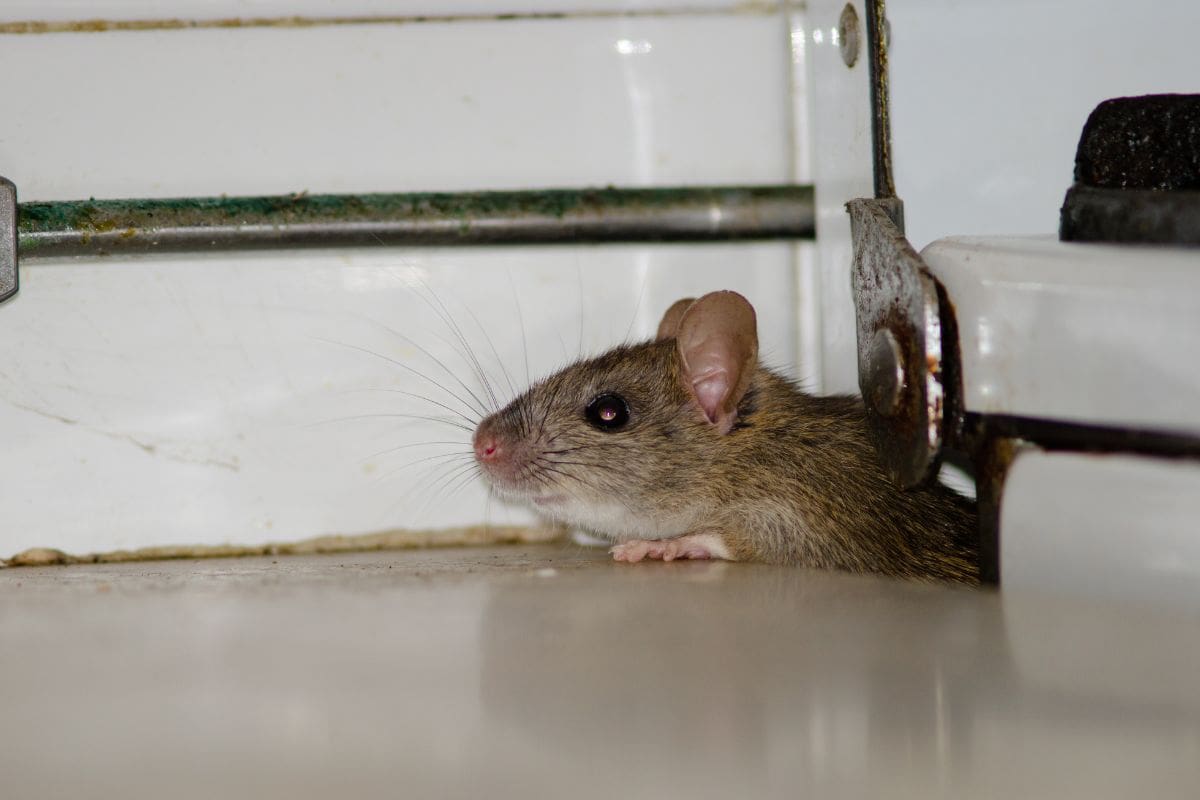
Rats are wary of humans and actively avoid contact with us where they can. The risk of being bitten by a rat in your bed is very low. Rat bites do happen, mostly to people who handle pet rats, but as a domestic householder it’s not something to lose sleep over.
What you should be cautious about is the longer-term health risk from sharing space with rats. The NHS lists leptospirosis (Weil’s disease) as one of the diseases rats can carry, and rat urine in food preparation areas is a real concern. So, while the rats themselves aren’t going to creep up on you in the night, getting them out of the house properly does matter for reasons beyond the spooky factor.
What to do next
If you’re trying to prevent rats from arriving in the first place, the answer is rat-proofing rather than any product you can buy. Walk around your house looking for gaps the size of a pencil or larger, particularly around pipes, vents, eaves and the bottom of doors. Block them with proper mesh or steel wool, not sealant alone (rats chew through sealant). Sort the bins, sort the bird feeders, sort the pet food.
If you’ve already got rats, deterrents won’t help you. Look for a pest controller who’s a member of the British Pest Control Association, uses cameras to monitor properly, and will come back if the problem isn’t solved.
We cover Oxfordshire, Berkshire and Buckinghamshire, and rat work is the bulk of what we do from autumn through to spring. If you’re nearby and want a free quote, give us a ring on 01491 833282 and we’ll come and have a look. We can also help with rat and pest proofing.